An office is more than just a space with computers and desks. Maintaining the safety of your staff and guests on a daily basis is essential to the efficient operation of your organization. People can work with true happiness and peace of mind when they are safe. We’ll go over some easy ways to strengthen the office building security and keep everyone safe.
Why Office Security Matters
The office is supposed to be an environment that allows employees to concentrate on their work without having to worry about their safety all the time. However, such elements as an unlocked door or an unidentified visitor can instantly become a matter of security.
Effective office security not only ensures that thefts are not carried out. It helps to safeguard the staff, customers, assets, sensitive information, and even the daily operation of the office.
Strong safety and security in the workplace also ensures that employees are assured. With security measures put in place, individuals are assured of their working environment. For businesses, security should be viewed as an important part of daily operations, not something to consider only after an incident.
7 Ways to Improve Office Building Security
1. Conduct a Security Risk Assessment
Every commercial work environment has a different physical layout; therefore, there cannot be one that fits all. A proper assessment identifies what the risks really are in your specific building. Inspect your commercial facility for entrance and exit points, blind spots, parking facilities, elevators, and stairs.
You must also examine restricted data areas and evaluate after-hours employee activity to spot potential vulnerabilities before they become liabilities. Security measures should always be based on the building’s actual risks.
2. Strengthen Building Access Control
Controlling who walks through your doors is your first line of defense. Traditional brass keys are easy to copy or lose, creating massive gaps in safety. Upgrading your infrastructure to a digital building access management system gives you real-time authority over your perimeters.
Implementing modern commercial building access control systems allows you to issue encrypted key cards, track visitor access credentials, and establish specific employee access levels. Most importantly, if an employee leaves your organization, their access credentials can be removed instantly.
3. Use CCTV and Security Monitoring
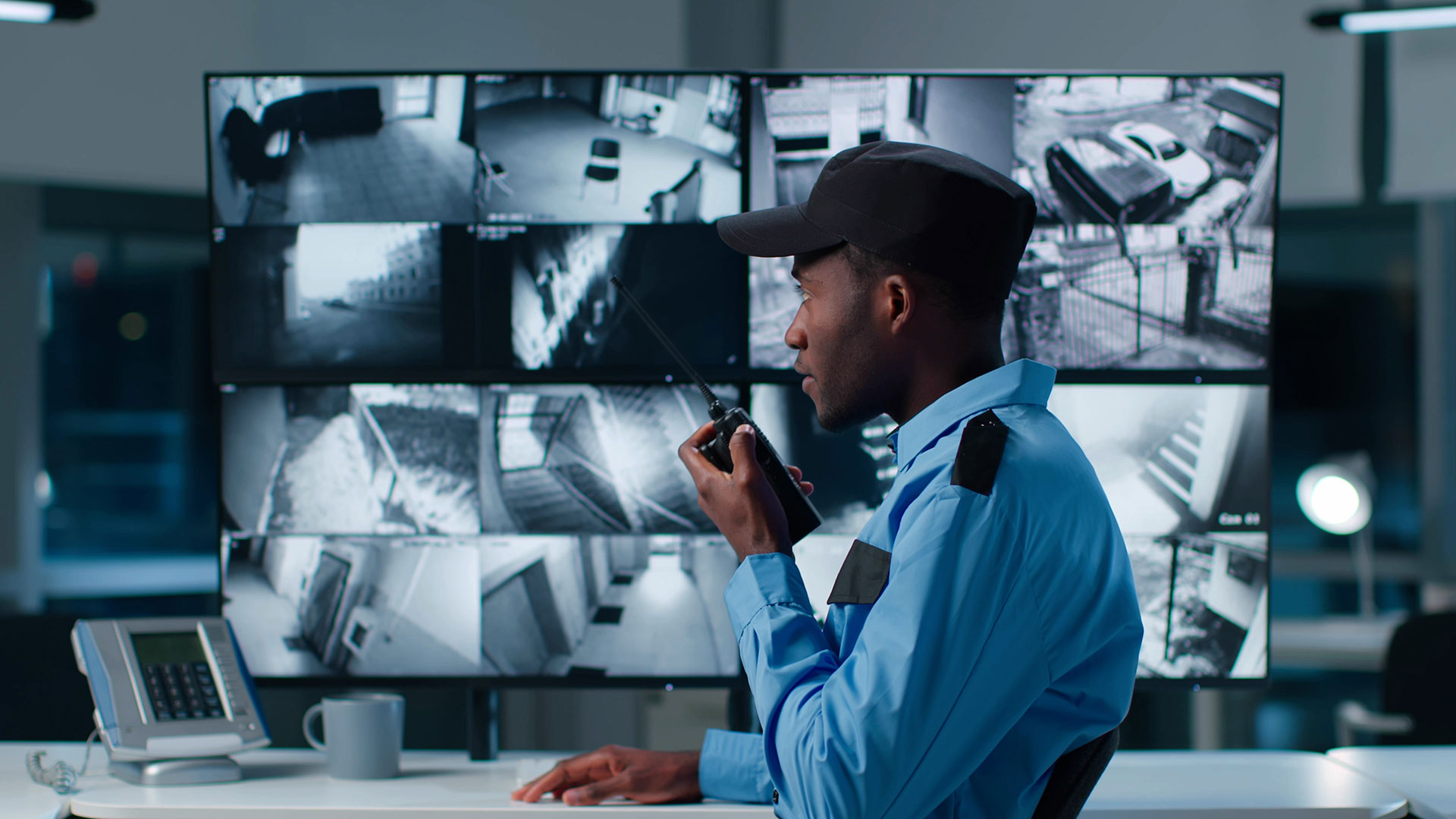
High-definition CCTV cameras act as an essential set of eyes for your facility. Placing cameras at main entry points and inside lobbies makes it simple to handle entry-point surveillance and lobby monitoring. This setup allows management to easily record and review incidents if an anomaly occurs.
However, an important point must be made: surveillance technology works best as part of a layered security strategy, rather than being presented as a replacement for trained security professionals. Cameras provide the data, but trained individuals supply the necessary response.
4. Improve Visitor and Delivery Management
Unmonitored visitors and unexpected delivery personnel can create significant security gaps if left unchecked. Establish a clear visitor sign-in process at your front entrance. Require structural identification, issue high-visibility visitor badges, and demand host confirmation before letting guests enter internal workspaces.
Contractor access and delivery management should be restricted to designated areas, making it easy and practical for a business manager to apply daily.
5. Protect the Office After Hours
A building’s security profile changes completely when daylight fades and normal business hours end. Night shifts, cleaning staff, external maintenance teams, and employees working late all require specific protection.
Ensure you have the proper security needed during quiet hours by maintaining strict controlled access, utilizing motion tracking, and organizing regular building patrols to secure empty floors.
6. Create an Emergency Security Plan
Crises do not wait for a convenient time to strike. Make sure that your organization is fully prepared to deal with the following crises: fire, medical, extreme weather, suspicious behavior, and active threats.
Be sure to prepare your team members so that they are clear about whom to contact, where to go, and what procedures to take.
7. Consider Trained Security Professionals
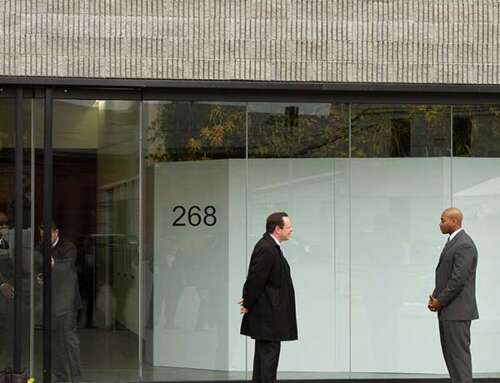
Technology can monitor a building, but people bring judgment and communication to security. A trained security officer can monitor entrances, assist visitors, observe unusual behavior, patrol designated areas, and respond according to the building’s security procedures.
Professional officers can also serve as a visible security presence. In many situations, that presence alone can help discourage unwanted activity. This is where choosing among commercial building security companies requires careful consideration. Businesses should look at training, experience, responsiveness, communication, and the provider’s ability to understand the specific property.
How Technology Supports Office Security
Modern corporate defense relies entirely on a layered security concept. A successful framework binds together access control hardware, CCTV cameras, alarm systems, monitoring software, and interactive visitor management logs. It is vital to recognize that technology never guarantees complete protection on its own.
Instead, these digital tools are meant to improve visibility and control across your property. Software helps identify a threat, while trained professionals provide the essential human judgment, customer service, and physical response required to resolve a crisis safely.
When Does a Business Need Commercial Building Security?
Professional safety and security services are greatly advantageous for big office buildings, multi-tenant facilities, and buildings receiving plenty of visitors. They are also extremely important for round-the-clock operating facilities, multifaceted premises, and facilities working with expensive equipment or valuable information.
When choosing experts in commercial building security, you have to consider such aspects as practical experience, agent training, emergency responses, clear communication, advanced technologies, customization opportunities, and local presence. Do not choose generic and out-of-state commercial building security facilities; they are not familiar with your local environment.
Why Businesses Choose Knight Security
Knight Security provides building and facility security services in New York City and the surrounding area.
Its security capabilities include trained security personnel, building and facility protection, access control, CCTV and electronic security, command center operations, reception and concierge services, patrols, fire safety plans, and emergency action plans.
We also emphasize planning and needs assessments. Its founder, Edward Troiano, has more than 20 years of experience in the security field and personally recruits and trains agents. This experience supports a practical, property-focused approach to security.
The objective is simple: protect people, property, and business operations while providing professional service.
What Clients Say About Us
Trust matters when someone is responsible for the safety of a workplace or commercial property.
Shelly Taggar of Metropolitan Pavilion shared this experience:
“Knight Security has provided security for Metropolitan Pavilion since 2008. I found Knight to be extremely helpful in dealing swiftly and effectively with a wide variety of situations.”
A long-term client relationship like this highlights an important part of professional security: being prepared, responsive, and dependable when situations change.
Conclusion
A safer office starts with understanding its risks and putting the right protections in place. From access control and surveillance to trained security personnel, every layer matters. Knight Security can help businesses develop a security approach suited to their building and daily operations. Ready to strengthen your office security? Contact Knight Security today to discuss a security plan built around your property’s needs.
FAQs
1. What is office security?
Office security includes people, technology, processes, and physical security used to ensure the safety of the employees, visitors, assets, information, and business operations.
2. Why is office building security important?
It ensures control over access and protection of people and assets, minimizes risks related to security, and allows businesses to be prepared to handle emergencies.
3. What are commercial building access control systems?
This refers to tools used to regulate access to buildings or certain areas of the buildings. Access can be regulated using access cards/credentials, PIN codes, smartphones, or other authorized methods.
4. Can CCTV replace security guards?
While it provides important visibility, it cannot take the place of human decision-making. Security officers can evaluate the situation and act upon it according to the process.
5. How can I improve security at my office?
You should start by doing a security assessment and analyzing such factors as building access control, visitor management, surveillance, restricted access, activities outside working hours, emergency plan, and presence of security staff.